CONTINUOUS SEPARATION
Decanter centrifuge
Separate solids from a liquid feed using a rotating bowl and scroll. Review feed variation, conditioning and the handling of both separated fractions.

DUTCH SEPARATION / INDUSTRIAL SOLUTIONS
Industrial separation solutions built around your stream, site and capacity. Dutch Separation combines modular equipment and process engineering for solids control, sludge dewatering, industrial waste and wastewater treatment.
01 / PROCESS CLARITY
Engineering a clearer path.
Separating Complexity - Delivering Clarity
01 / CAPABILITIES
Separate solids from liquids, dewater sludge and build a treatment train around your material. Our modular systems combine the required equipment with process engineering, commissioning and operational support defined for your project. We also configure decommissioning water treatment for pipeline flush water and slops.
Explore equipment rental ↗ Browse module library ↓01
Solids control services and solid-liquid separation for energy and industrial operations. Configure shale shakers, hydrocyclones and decanter centrifuges around your material, process and site requirements.
Explore solids control ↗02
Industrial waste treatment and sludge dewatering shaped around your waste stream. Combine centrifuge dewatering, filtration and filter press equipment to separate solids and define a practical treatment process.
Explore sludge dewatering ↗03
Industrial wastewater treatment solutions built around your stream characteristics and treatment objectives. Configure clarification, filtration, chemical dosing and DutchSORB® adsorption within a modular treatment system.
Explore wastewater treatment ↗ Produced water treatment ↗ Decommissioning Water Treatment ↗EXPLORE / MODULAR EQUIPMENT
Choose a process family to explore the module library. Add equipment to your enquiry to start a discussion; final selection, specifications and rental availability are confirmed against your project duty.
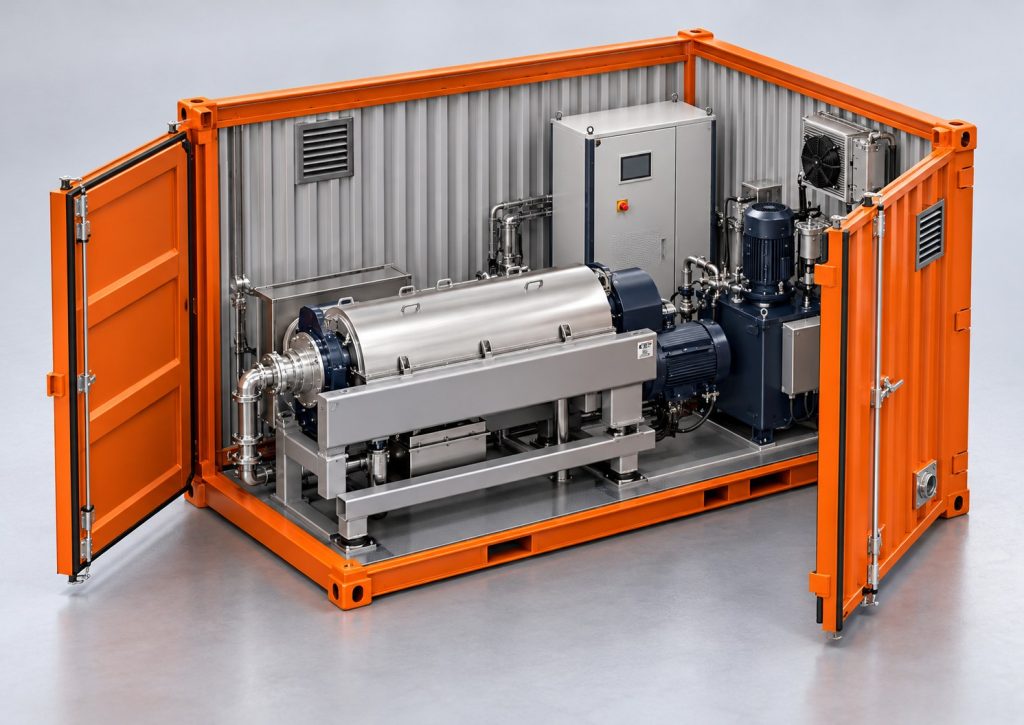
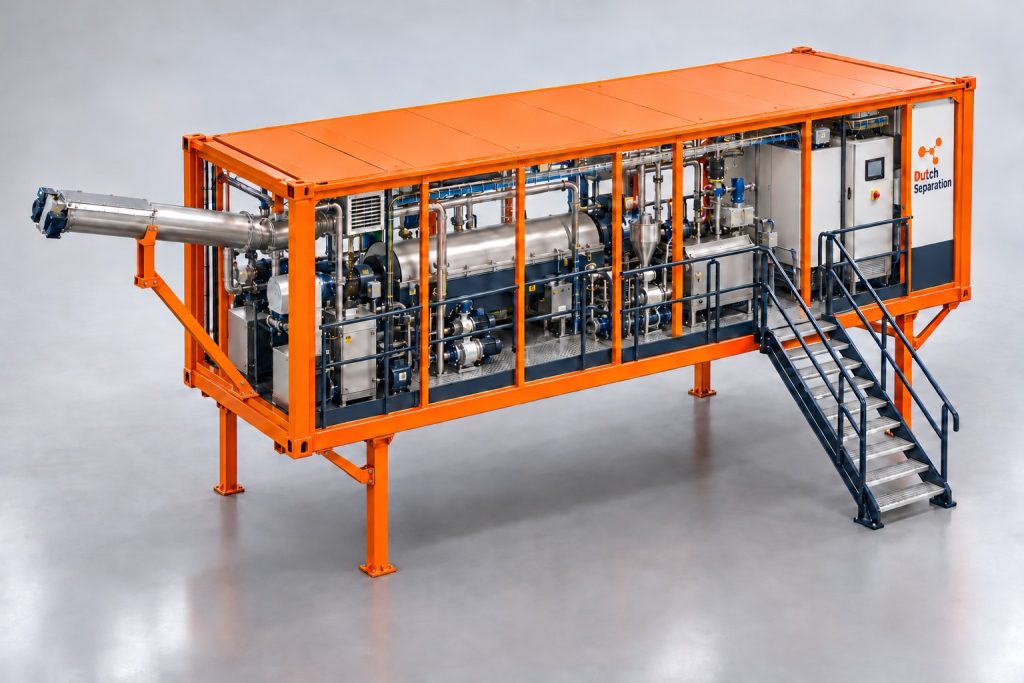
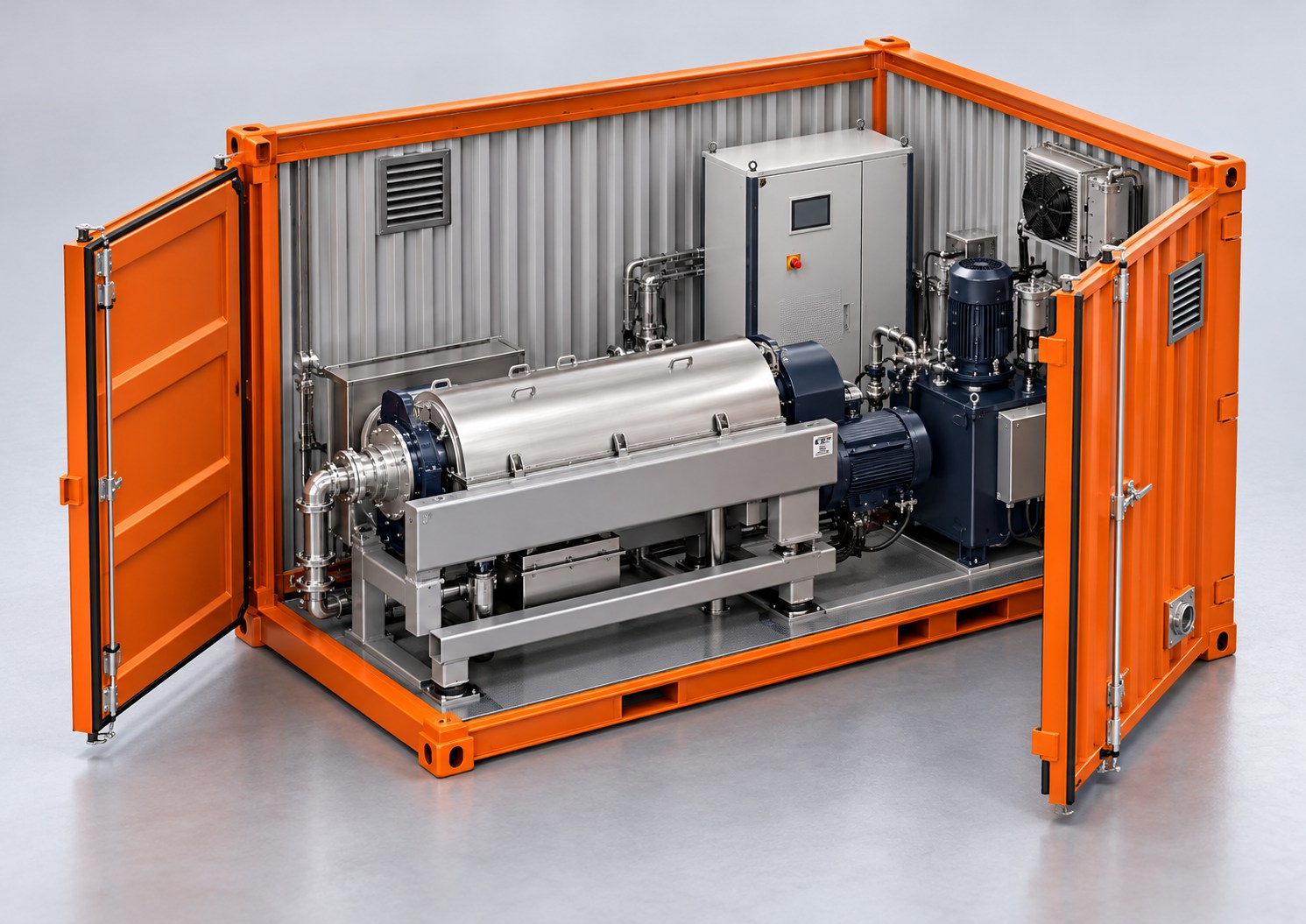
Decanter centrifuge concept render. Final equipment configuration is project-specific.
CONTINUOUS SEPARATION
Separate solids from a liquid feed using a rotating bowl and scroll. Review feed variation, conditioning and the handling of both separated fractions.
BATCH DEWATERING
Build a cake through pressure filtration in a batch cycle. Consider full-cycle throughput, cloth cleaning and the route for cake removal.
02 / MODULAR THINKING
Modular process equipment connects your treatment requirements with a practical system configuration. The setup can be tailored to your site, capacity and project duration, with equipment rental considered for the required duty.
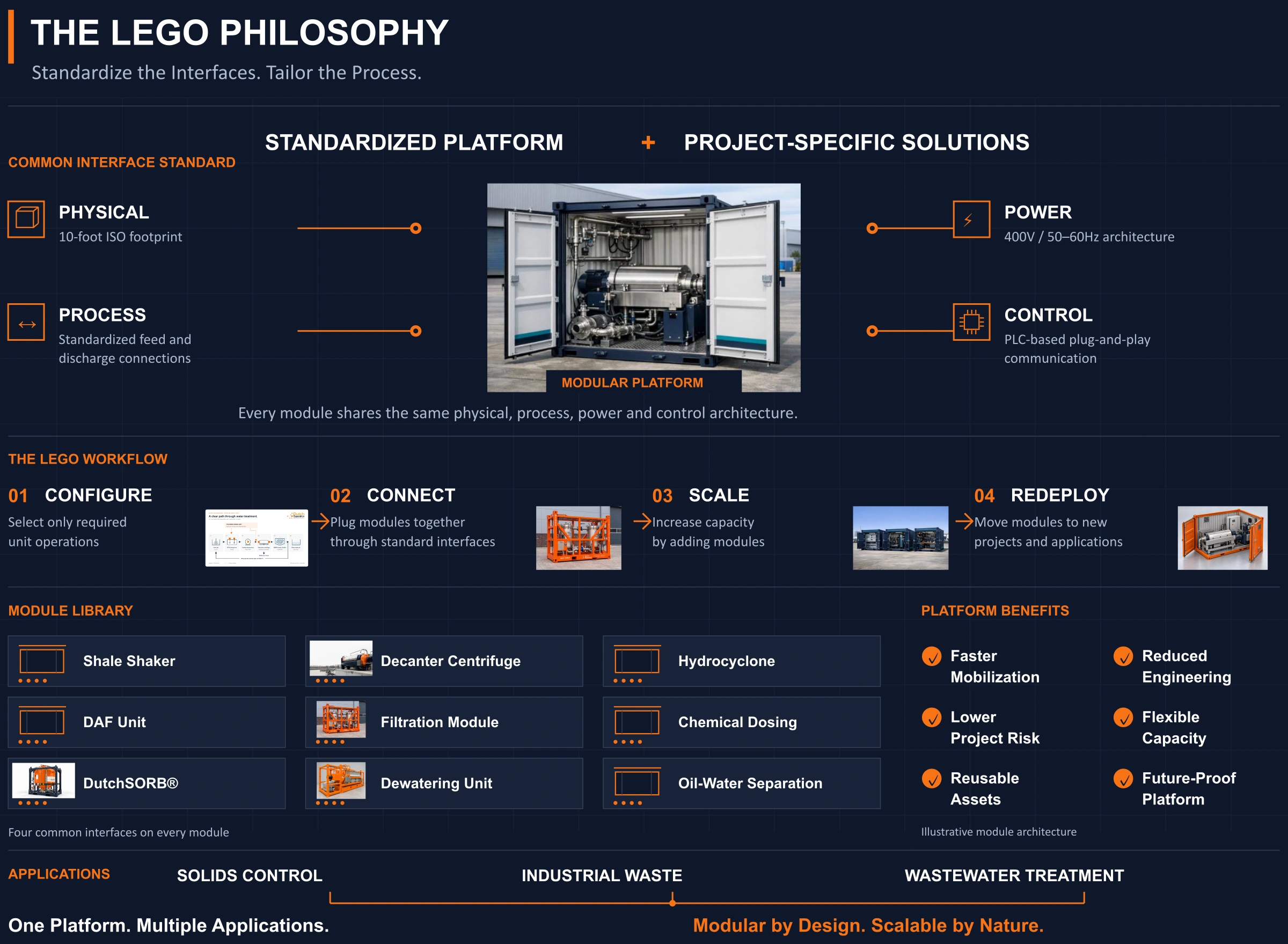
01 / CONFIGURE
Define the feed, operating conditions and required outcome. Build the proposed treatment train around those requirements. Include representative sample results, expected variations, operating hours and the destination of each separated fraction. Review available utilities and the equipment already on site. These details help identify which unit operations are required and where testing may support equipment selection.
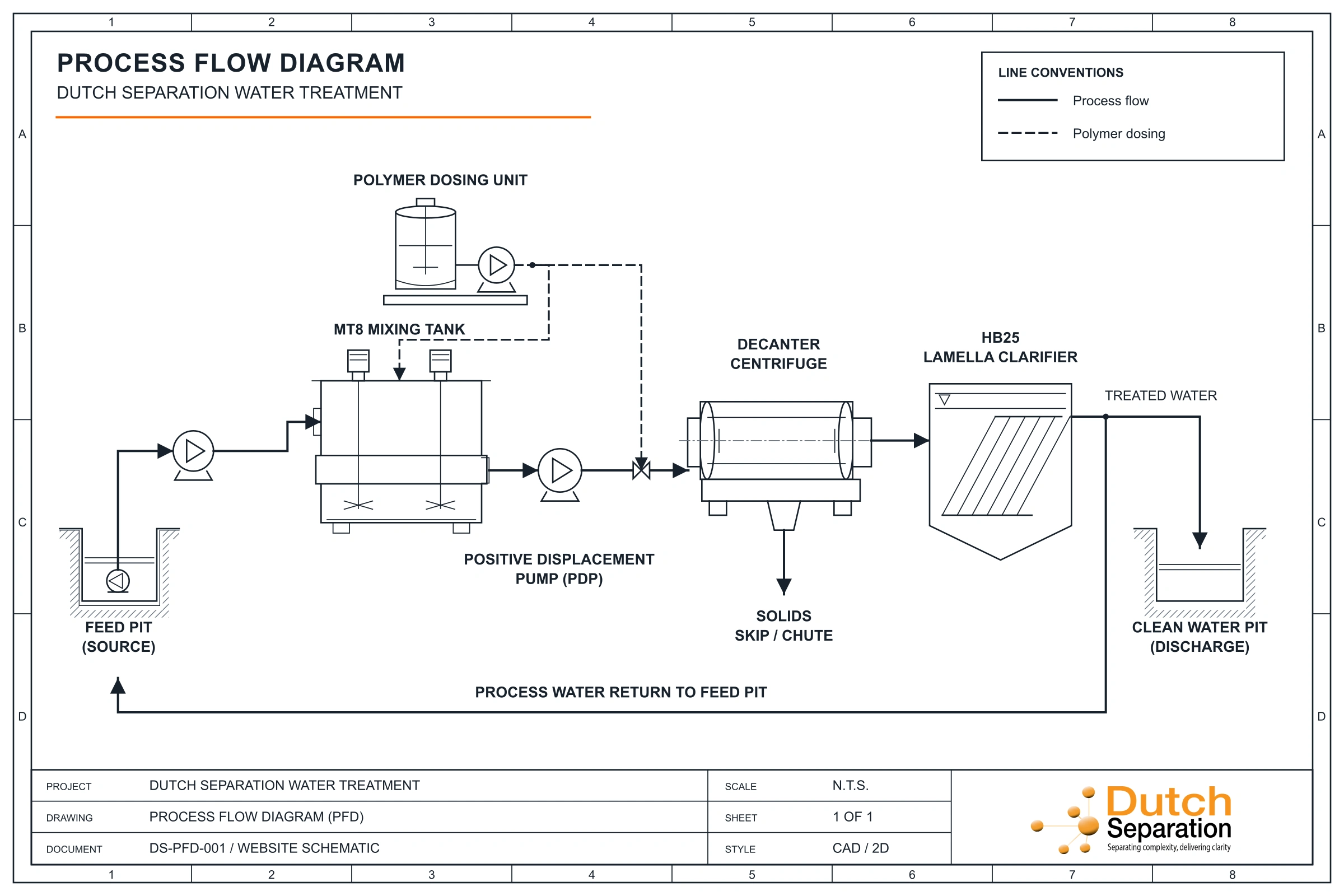
01 — CONFIGURE / MODULAR SOLUTIONS
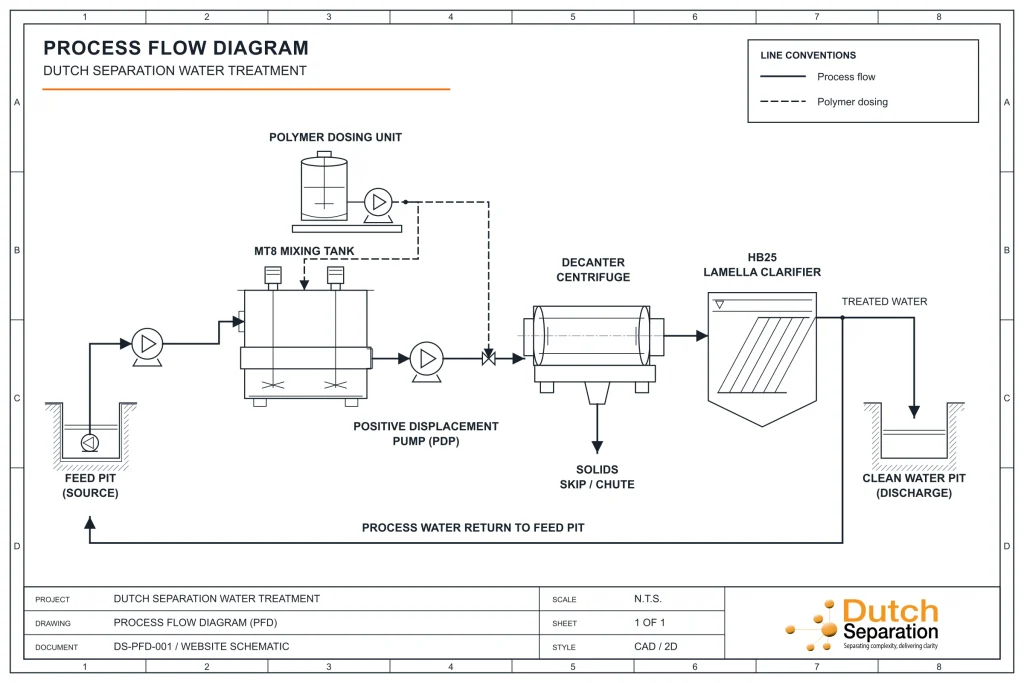
Explore each stage below, or select a numbered point on the diagram. Select the drawing itself to open the full-size view.
Review the source stream, flow variation and storage. Pump selection and feed control must suit the material and downstream operating conditions.
Explore related services ↗02 / CONNECT
Plan every interface: process flow, available space, power and control. Define how the modules work together and fit into your operation.
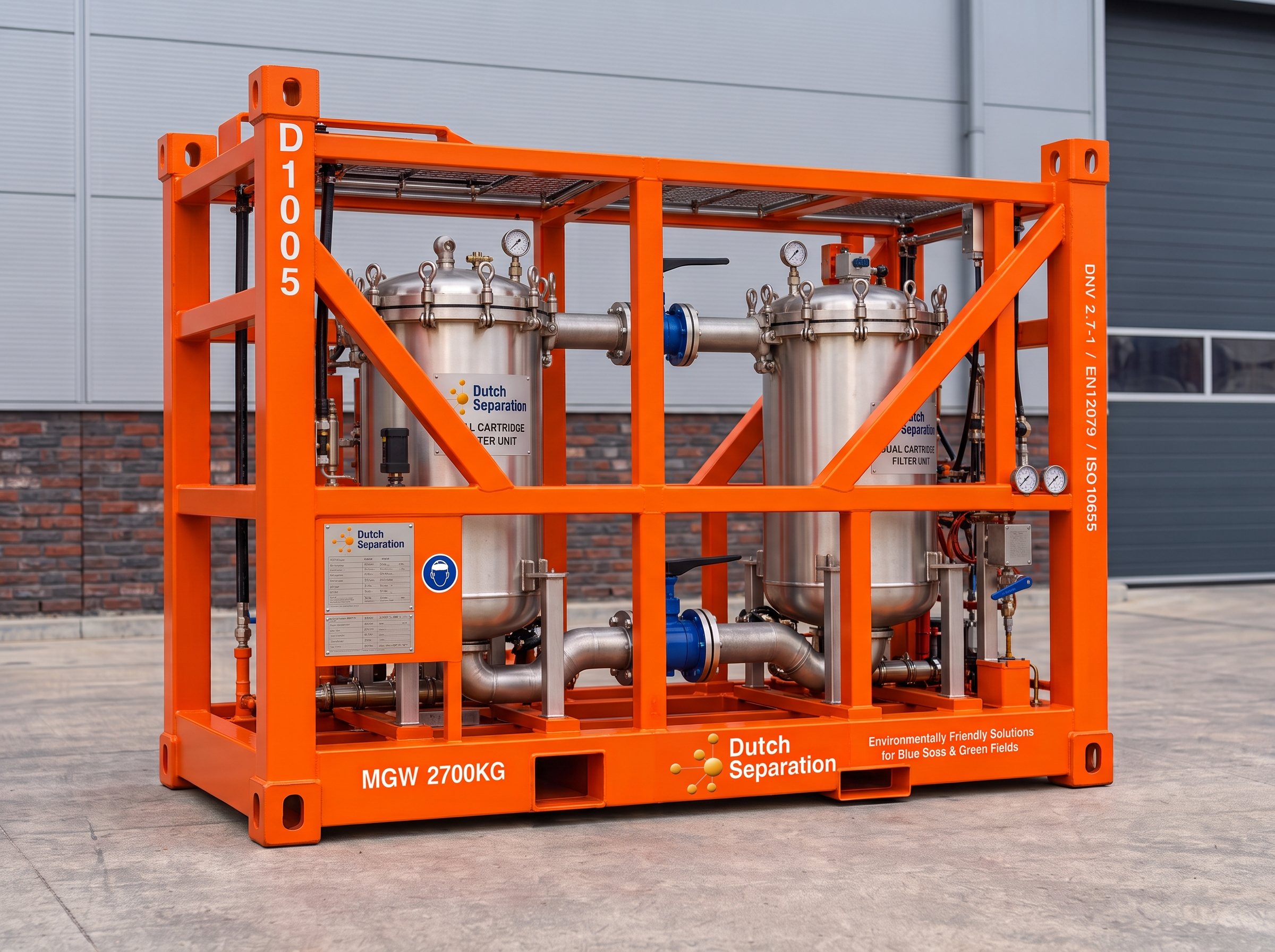
02 — CONNECT / MODULAR SOLUTIONS
03 / SCALE
Bring future capacity and changing requirements into the conversation early, so the configuration reflects the wider project. Review normal throughput alongside peak demand, available feed storage and downstream handling limits. Adding equipment also requires checking power, pumping, controls and physical connections. Define how each stage will operate together before increasing the number of modules on site.
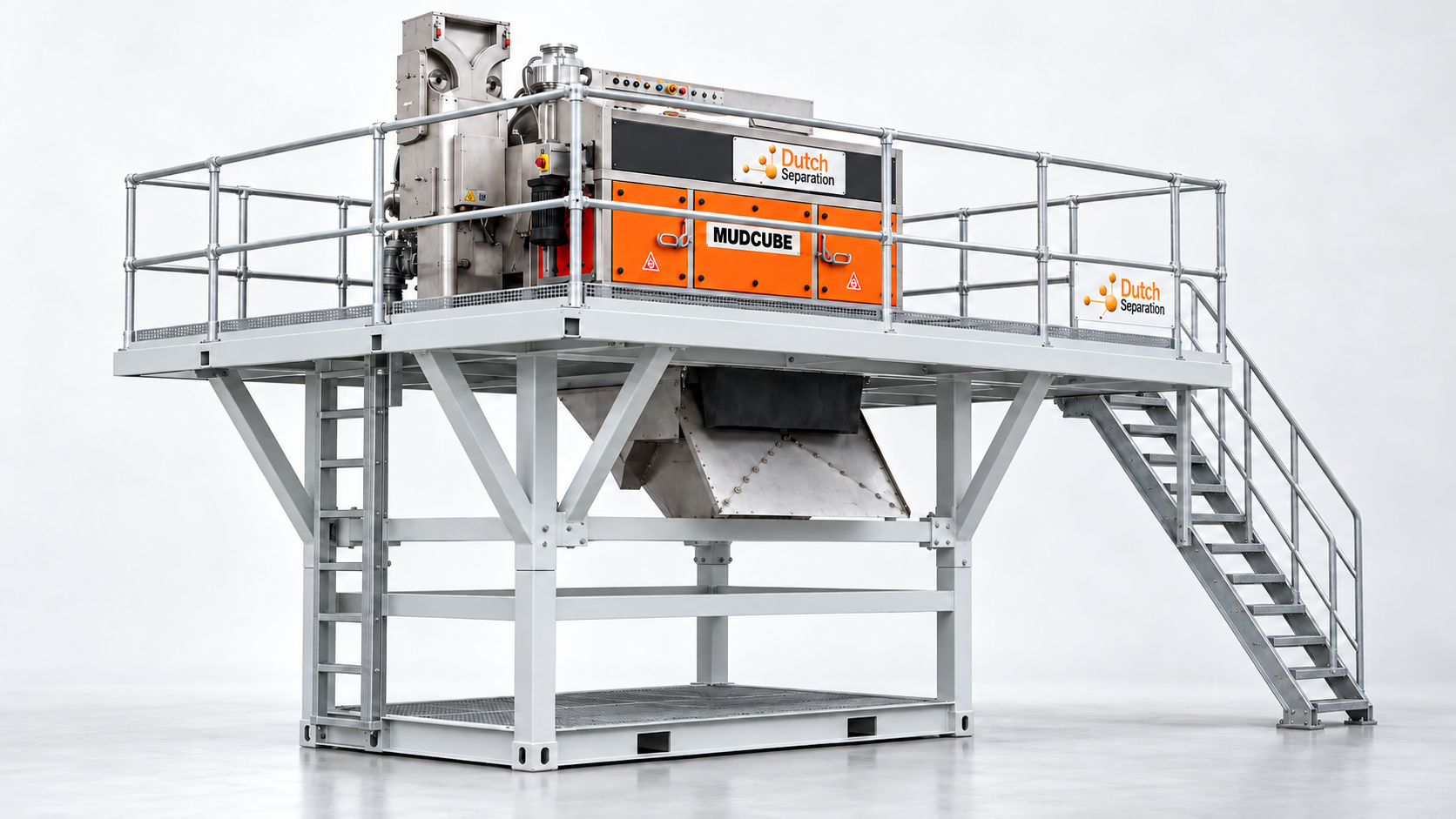
03 — SCALE / MODULAR SOLUTIONS
04 / REDEPLOY
Discuss relocation and future use when defining the modular setup. Plan the interfaces and practical requirements from the start. Consider transport access, lifting arrangements, cleaning and the conditions expected at the next location. Record connection details and the agreed operating scope for each module. A new application still needs a process review to confirm that the equipment suits the material and duty.
04 — REDEPLOY / MODULAR SOLUTIONS
03 / OUR APPROACH
01
Define requirements and site constraints. Establish the priorities and the information needed to move forward.
02
Process engineering services translate your treatment requirements into a system design, equipment configuration and execution plan with clear interfaces.
03
Coordinate supply, commissioning and acceptance against the agreed project requirements.
04
Provide the documentation, training and operational support defined for your project.
04 / YOUR NEXT STEP
Share your requirements and let’s start a focused conversation. Describe where the stream comes from, its expected composition, normal flow and peak demand. Include any available sample analysis, the intended outlet quality and the route for the separated solids. Tell us the site location, available space, utilities, operating hours and project duration. Note access or lifting restrictions and any equipment already installed. If some information is still unknown, explain what is available and which decisions are pending. We can then identify the information needed to review a configuration and agree the next step.
Tell us about your material, process and desired outcome.
Three short steps to describe the duty. You can leave unknown details blank, then add the brief to your enquiry below.