DUTCH SEPARATION / SERVICES
Produced Water Treatment
Produced water treatment requires a process built around the actual contaminant profile and the intended water route. Dutch Separation combines modular separation equipment and process engineering to review solids removal, oil-water separation, filtration and adsorption requirements.
Discuss your project ↗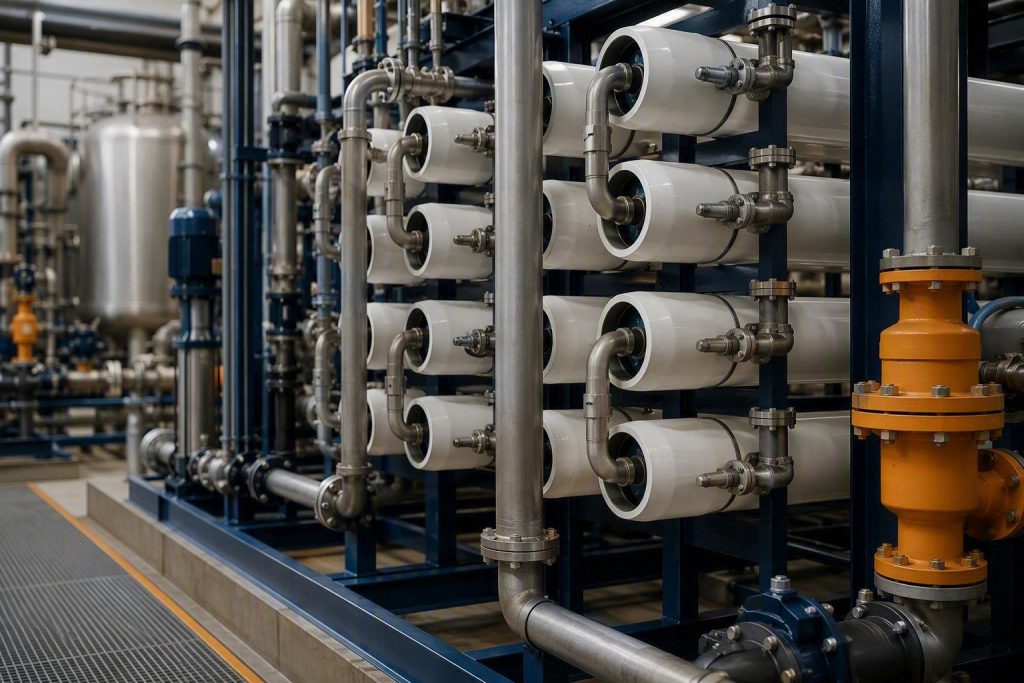
Process equipment with stainless steel pipework and filtration housings. Treatment stages are selected around the water analysis.
01 / APPLICATION
Produced water treatment: start with analysis
Oil content, suspended solids, dissolved contaminants and salinity can create different treatment demands. Variation during operation is as important as an individual sample result. The review begins with representative analysis, operating conditions and the required outlet quality.
Define whether the treated water is intended for reuse, another treatment step or an agreed discharge route. The acceptance criteria and sampling plan need to be clear before the equipment is selected. A modular configuration must be assessed against the complete water composition.
02 / EQUIPMENT
Configure the required separation stages
Oil-water separation and solids removal can prepare the water for finer filtration or a polishing stage. Chemical dosing and conditioning may be considered where the stream requires them. DutchSORB® adsorption can be reviewed for suitable contaminants and operating conditions after upstream treatment needs are established.
No single treatment method addresses every produced-water constituent. Filtration and adsorption do not, by themselves, establish removal of dissolved salts. The proposed train should identify which contaminants each stage addresses and where further treatment or testing is needed.
03 / PROJECT DELIVERY
Plan interfaces and operational handling
Process flow, available utilities, footprint and upstream or downstream connections shape the final installation. Residual solids, separated oil and spent media also need a defined handling route. These duties are included in the process and interface review.
The agreed scope can include engineering, equipment supply or rental, commissioning and project support. Send the water analysis, minimum and maximum flow, site conditions, project duration and outlet requirements to begin a practical discussion.
Produced Water Treatment: project questions
Can a produced-water system use modular equipment?
Modular unit operations can be configured into a treatment train where they are suitable for the duty. Sizing, materials, utilities and control interfaces require project-specific review.
Will adsorption replace oil-water separation?
It should not be assumed to do so. Upstream oil and solids removal requirements must be established before a polishing stage is selected.
Can you confirm discharge compliance from the website?
Compliance depends on the applicable requirements, water analysis and demonstrated treatment performance. Acceptance criteria, testing and responsibilities must be agreed for the project.
What variation matters in produced water treatment?
Produced water treatment should be assessed against a representative operating range, including changes in oil content, suspended solids, temperature and flow. Record where samples were taken and which analytical methods were used. Include any upstream chemicals that may influence separation or adsorption. Understanding the variation helps establish the duties of the proposed treatment stages and the further analysis needed. One sample provides useful information but may not describe the complete operating envelope.
How should a produced-water treatment trial be assessed?
Before a produced water treatment trial, agree the inlet condition, target outlet quality, sampling points and assessment period. Identify which contaminants each stage is intended to address and how residual streams will be handled. Track operating conditions alongside analytical results so the findings can be interpreted in context. The review should include media replacement, cleaning and utility needs, helping define the practical operating scope before the final configuration is selected.
Connected capabilities.
SEPARATING COMPLEXITY. DELIVERING CLARITY.
Tell us about your stream.
For produced water treatment, share the material, location, required capacity, project duration and desired outcome. We will review the process requirements and define the next step.
Discuss your separation challenge ↗ info@dutchseparation.com